
Conference Room Floor Cable Hunt: After-Hours Flash Candid
Tailoring that survives the 9-to-5, captured under fluorescent glare and late-night exhaustion. The office at its most honest: unposed, tired, and sharp.
Get the next prompt drop
We publish new prompts weekly. Get them in your inbox instead of checking back.
You're in. New drops land in your inbox.
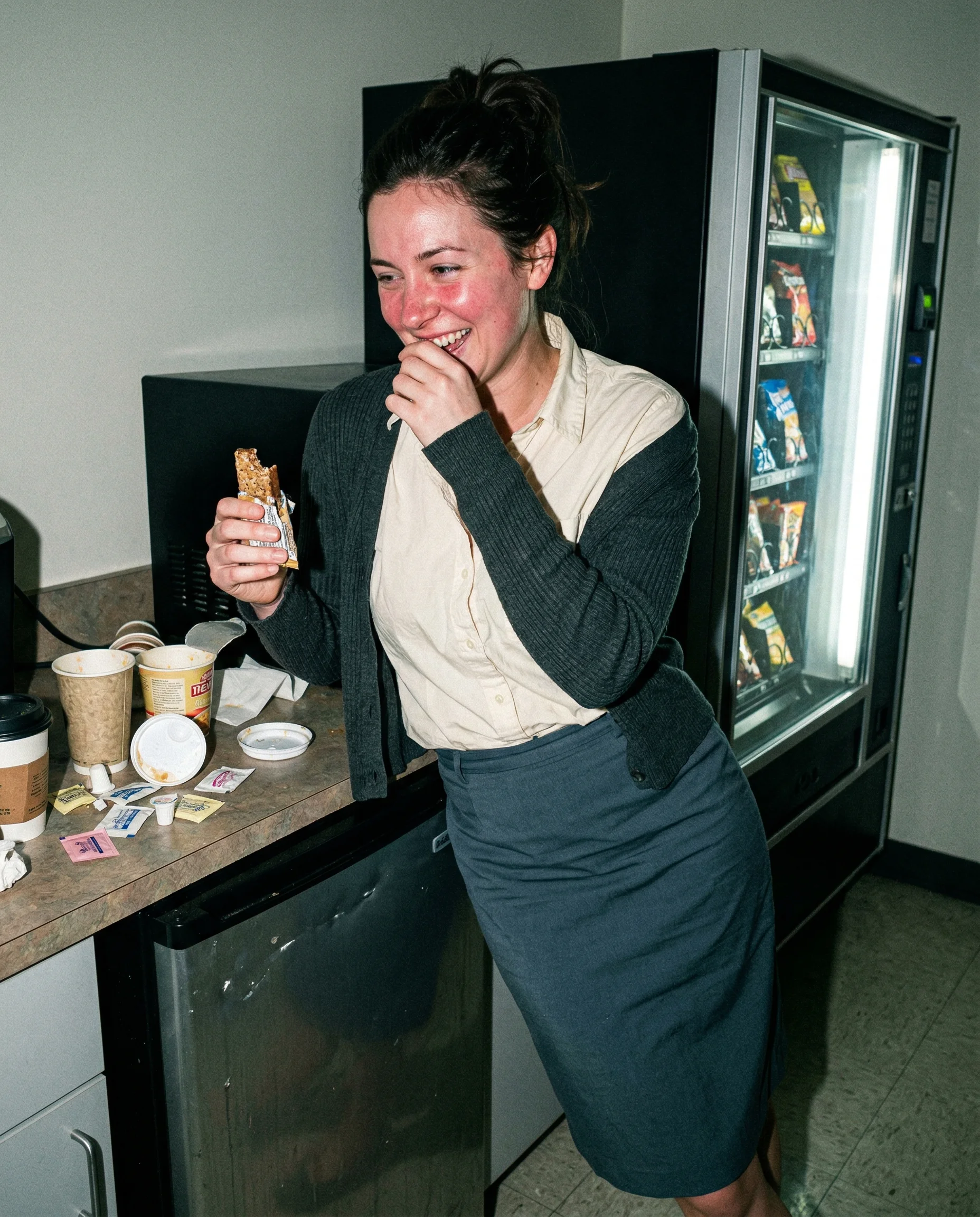
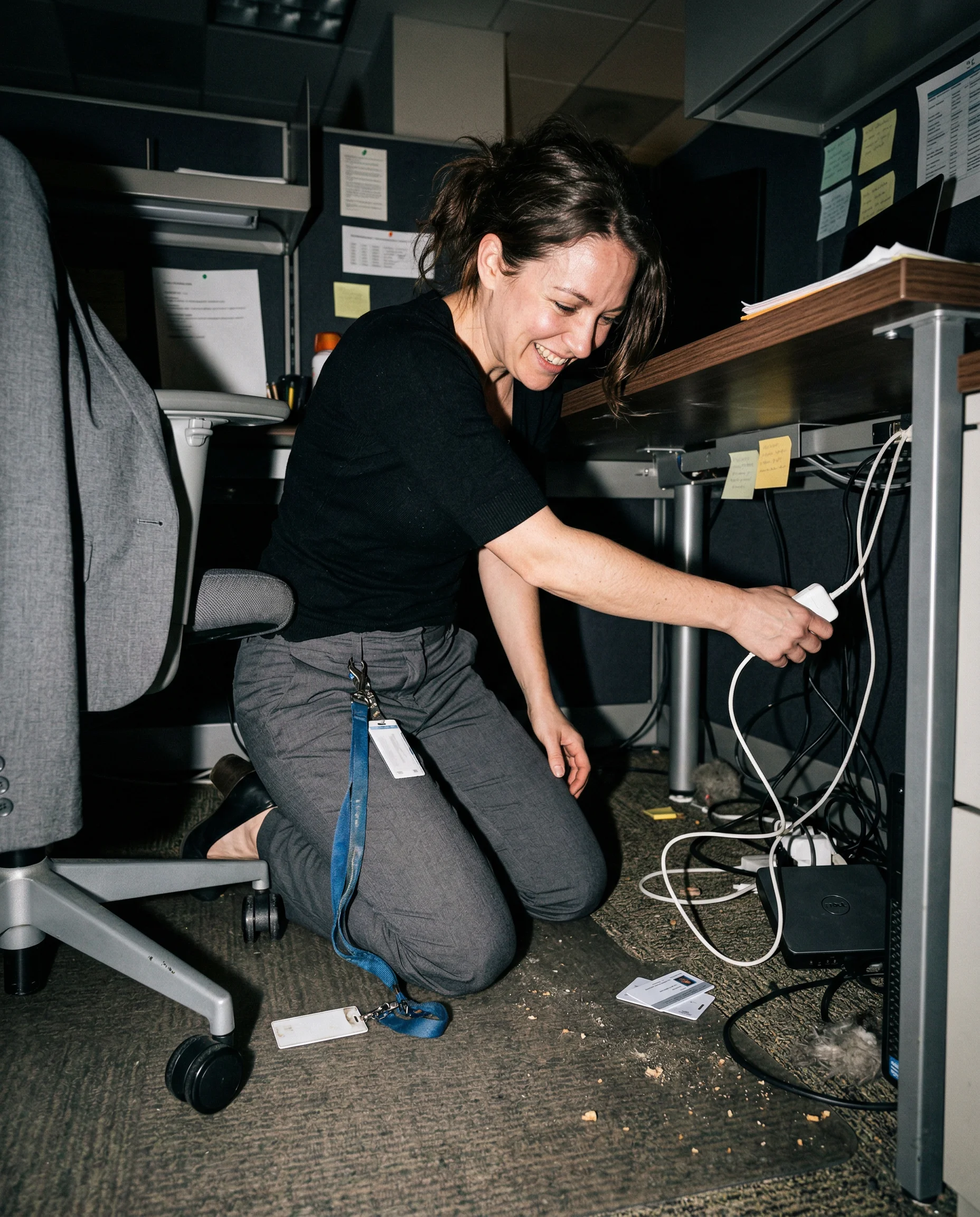
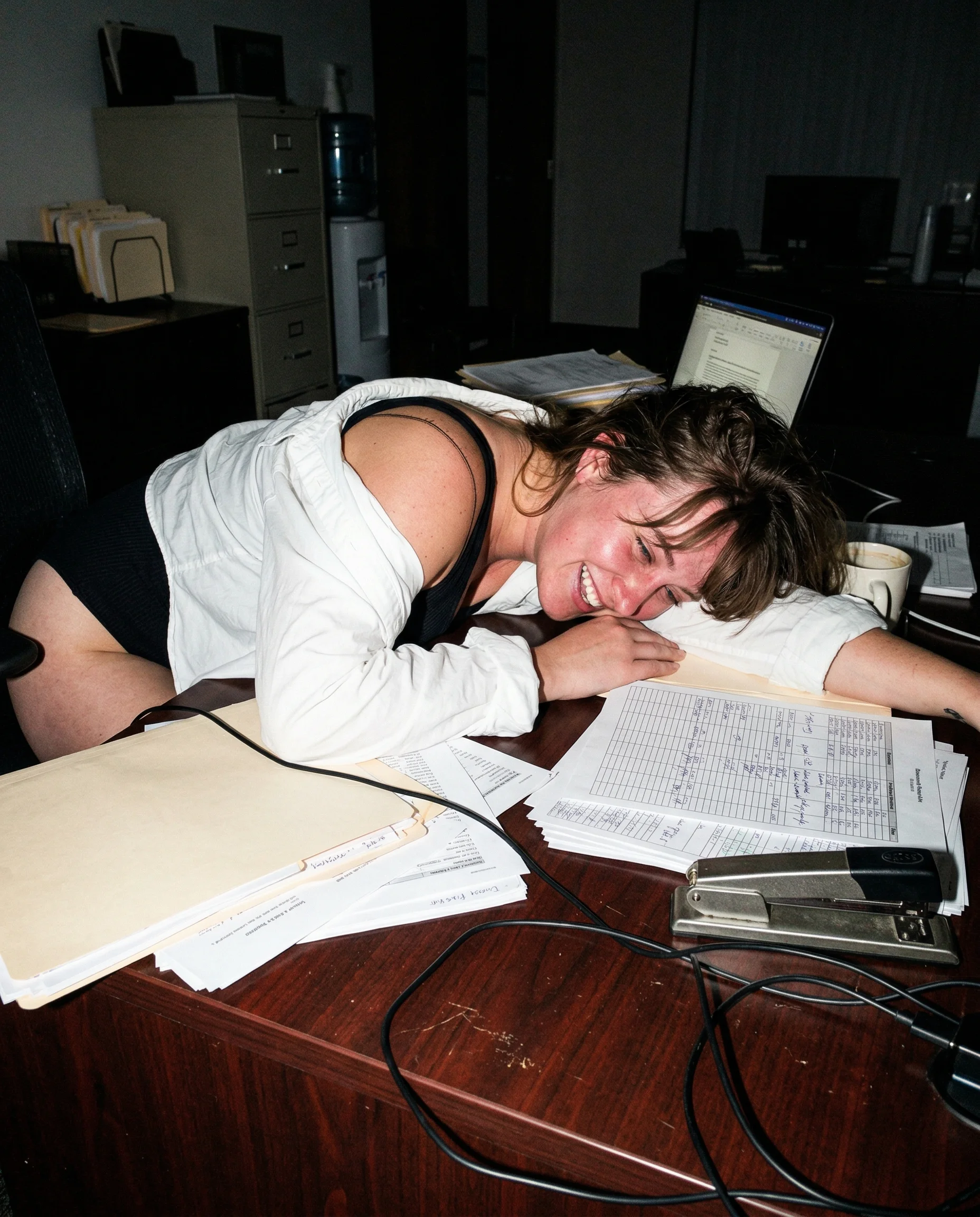

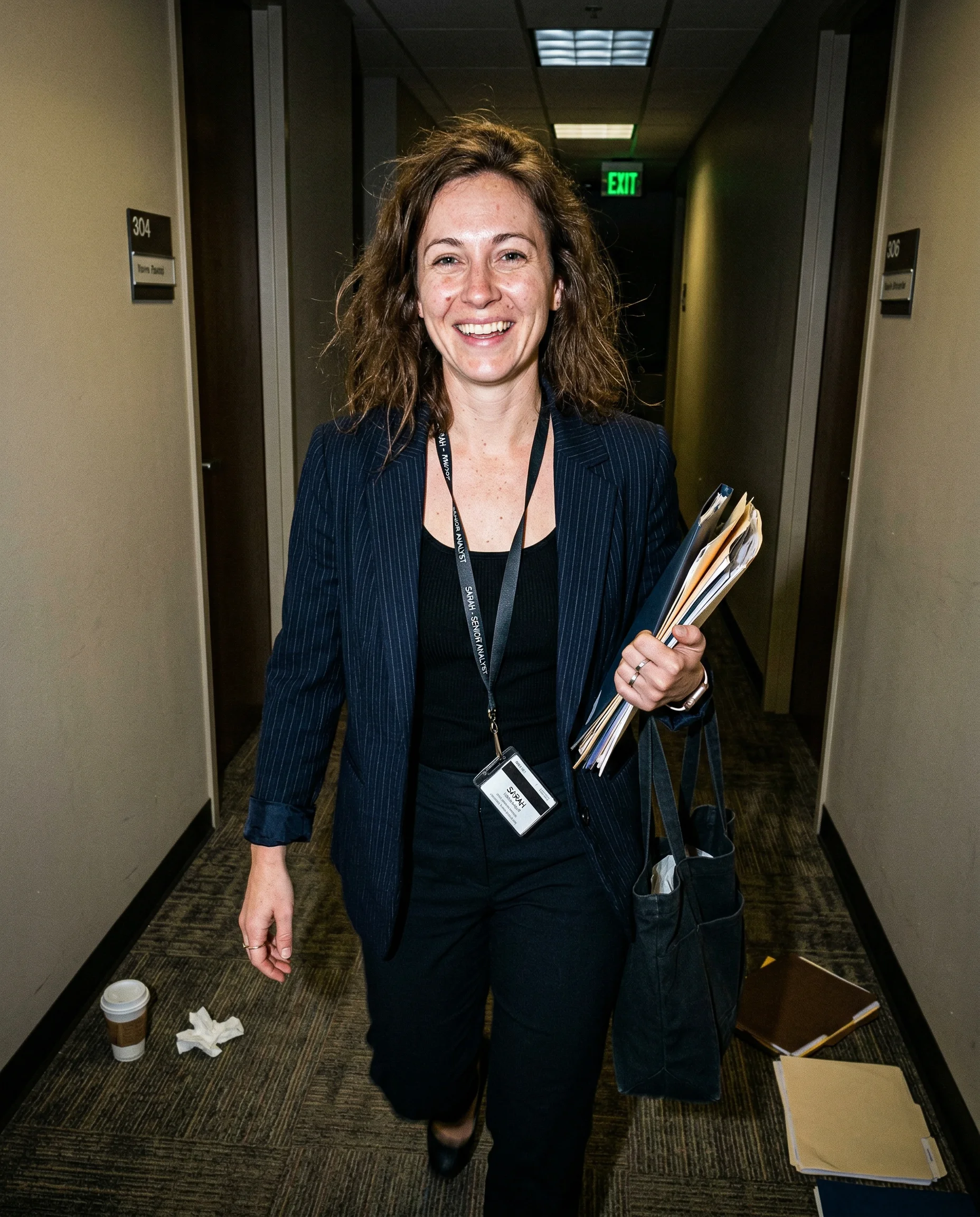
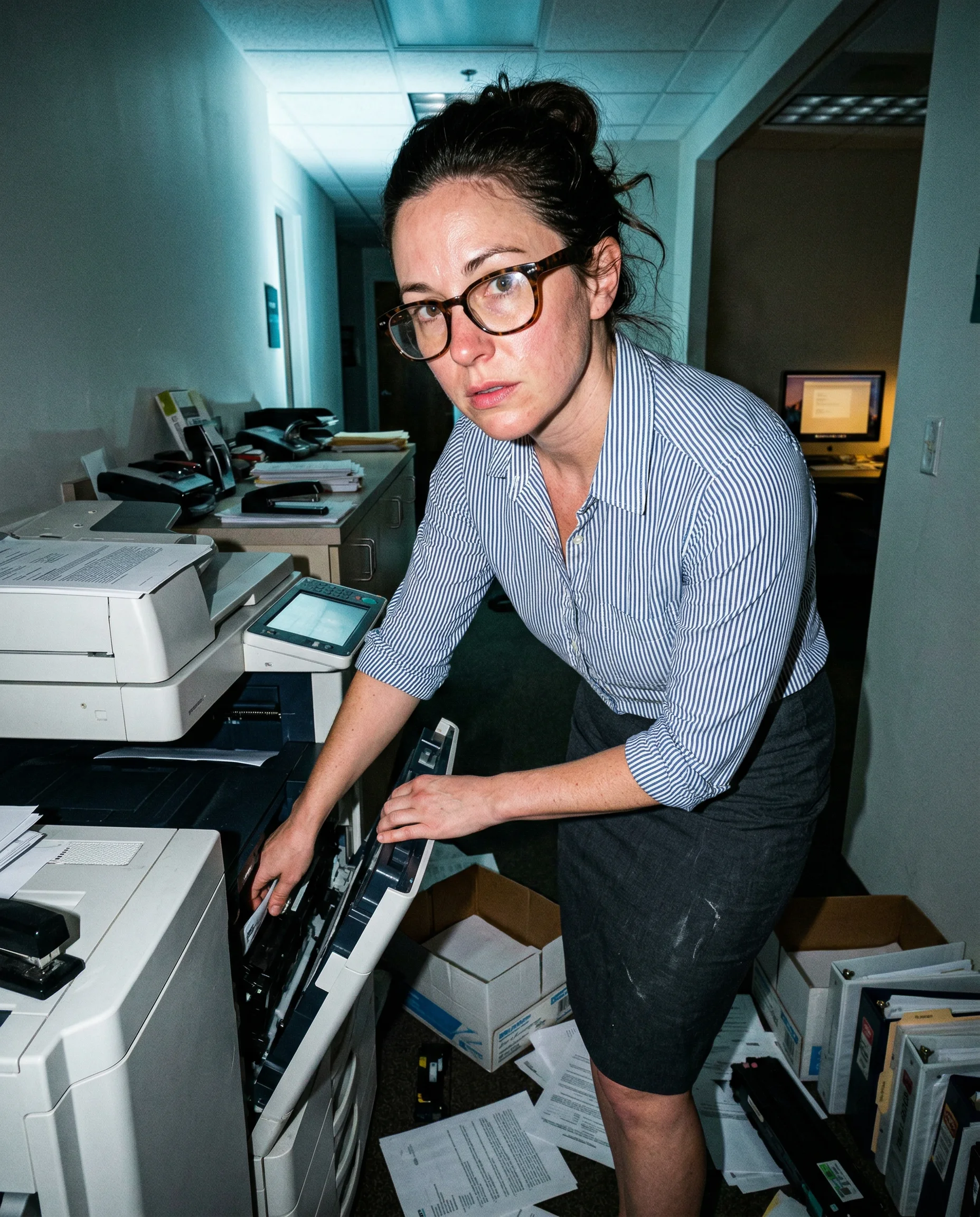
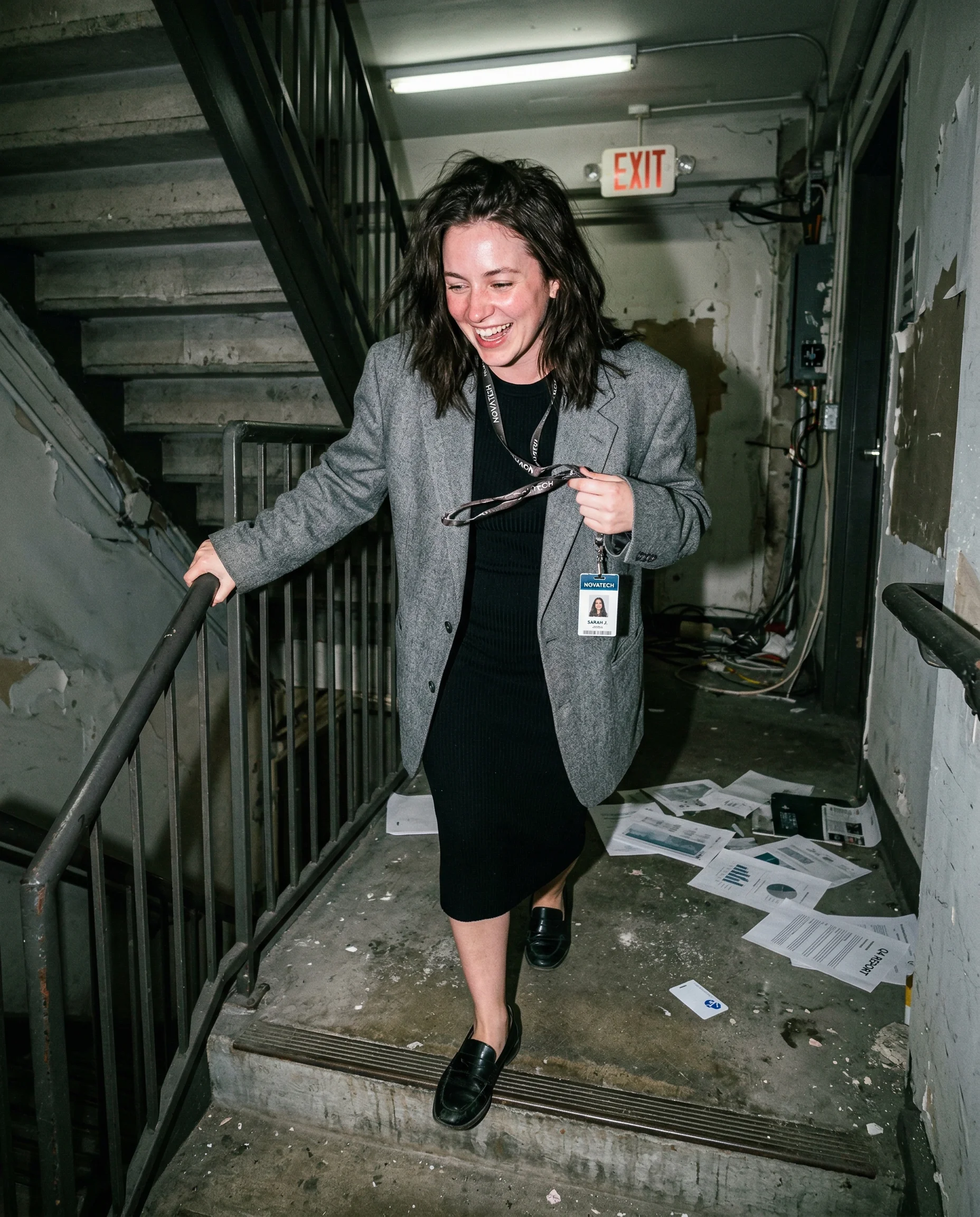
floor-level perspective and tangled optics
I shot this from the ground because that is exactly where the dignity of a corporate job goes to die. When you drop the camera to the level of the commercial carpet, you aren’t just framing a person; you are framing the mess they are forced to inhabit. The tangled HDMI cables and the scattered marker caps are the real subjects here. They provide a jagged, chaotic foreground that anchors the image in a specific, unglamorous reality. If I had shot this from eye level, it would look like a staged portrait. By forcing the lens into the dust and the cables, the scene feels like a genuine interruption rather than a planned event.
harsh flash on tired skin
I lean into the direct flash because it is the most honest light I have. It creates that sharp, unforgiving T-zone sheen that you can’t fake with soft studio modifiers. Notice the way the light hits her face—it doesn’t smooth anything out. It highlights the texture of her skin, the tiny blemishes, and the faint peach fuzz that usually gets airbrushed away in corporate photography. When the flash is this rude, it strips away the artifice. It makes the skin look like actual human skin, not a plastic render. If the light were any softer, the entire scene would lose its edge and start looking like a stock photo for a project management app.
the wardrobe of long-term exhaustion
Her outfit is doing the heavy lifting here. The mock-neck is pulled, the skirt is riding up from the floor time, and the blazer is just tossed over the chair like an afterthought. This isn’t about looking sharp for a meeting; it is about the friction of wearing professional clothes for ten hours too long. The charcoal fabric looks heavy and slightly wrinkled, reflecting the reality of someone who has been moving between meetings and a desk chair all day. By keeping the clothing slightly disheveled, I am signaling that this isn’t a morning-fresh professional look. It is the end of a d*mn long day, and the clothes are starting to show the wear and tear of the office grind.
Frequently asked questions
Why does the flash look so harsh in this conference room?
The flash is direct and un-diffused, which is exactly why it works. It creates deep, immediate shadows behind her and a high-contrast look on her skin. If I had used a softbox or bounced the light, the image would lose that specific, trapped feeling of a late-night office.
How do you keep the scene from looking too staged?
I focus on the peripheral mess. The water bottle, the scattered papers, and the tangled cables are the key. If everything were tidy, the image would feel like a fake, polished marketing shot. The mess is what makes it feel like an actual moment.
What role does the low camera angle play?
It puts the viewer on the floor with her. It changes the power dynamic of the shot. Instead of looking down at an employee, you are level with them in the middle of their frustration, which creates a much more intimate, candid connection.
Is the skin texture intentional?
Absolutely. I want to see the pores and the natural sheen. If the skin looks too perfect, the whole image feels like AI-generated slop. The imperfections are what make the subject feel like a real, tired human being.