
Struggling with a Wool Coat Zipper in a Restaurant Entryway
First dates are rarely cinematic. I track the friction of a first meeting: the napkin-fidgeting, the coat-check panic, and the relief of a shared laugh through smudged glass.
Get the next prompt drop
We publish new prompts weekly. Get them in your inbox instead of checking back.
You're in. New drops land in your inbox.
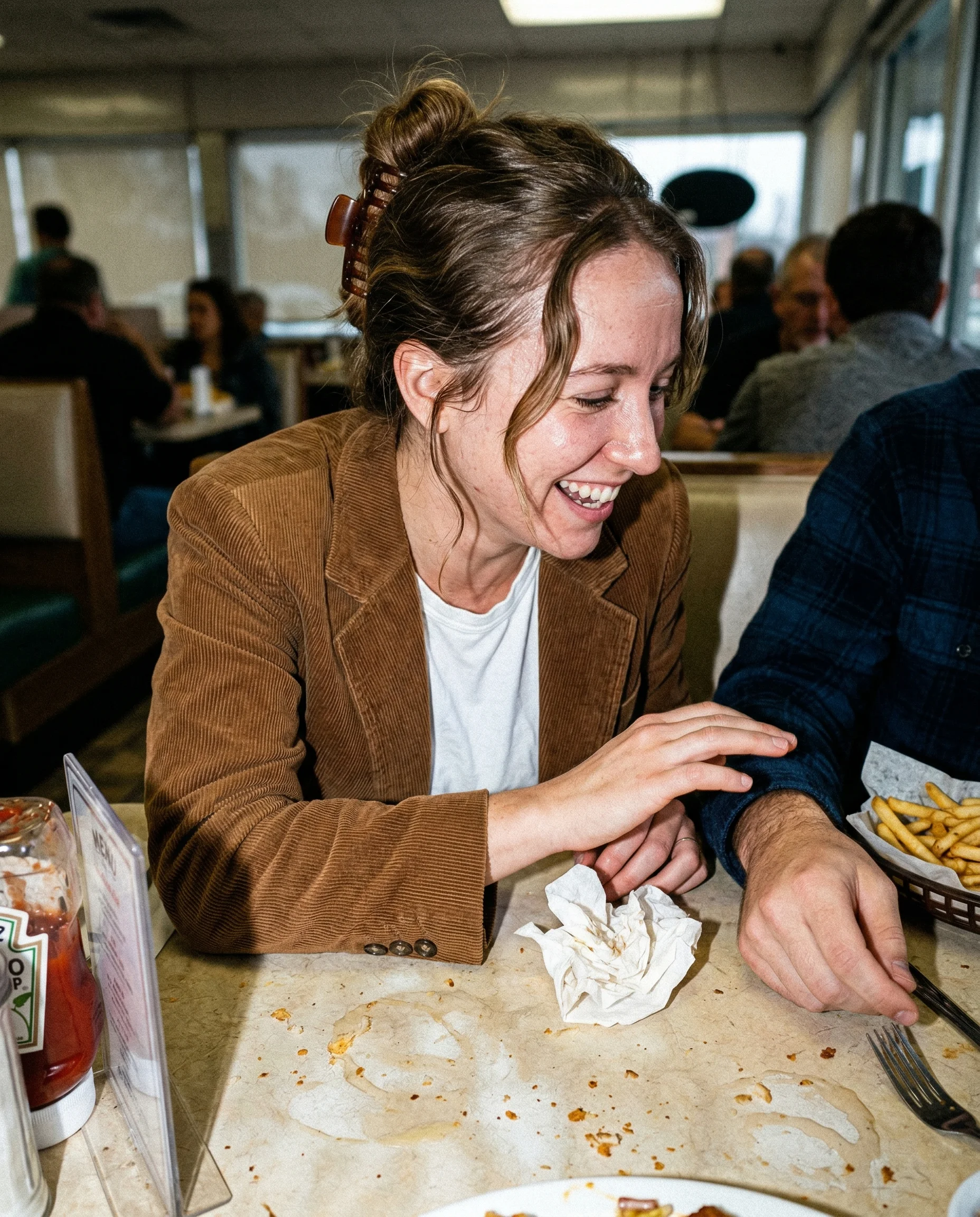
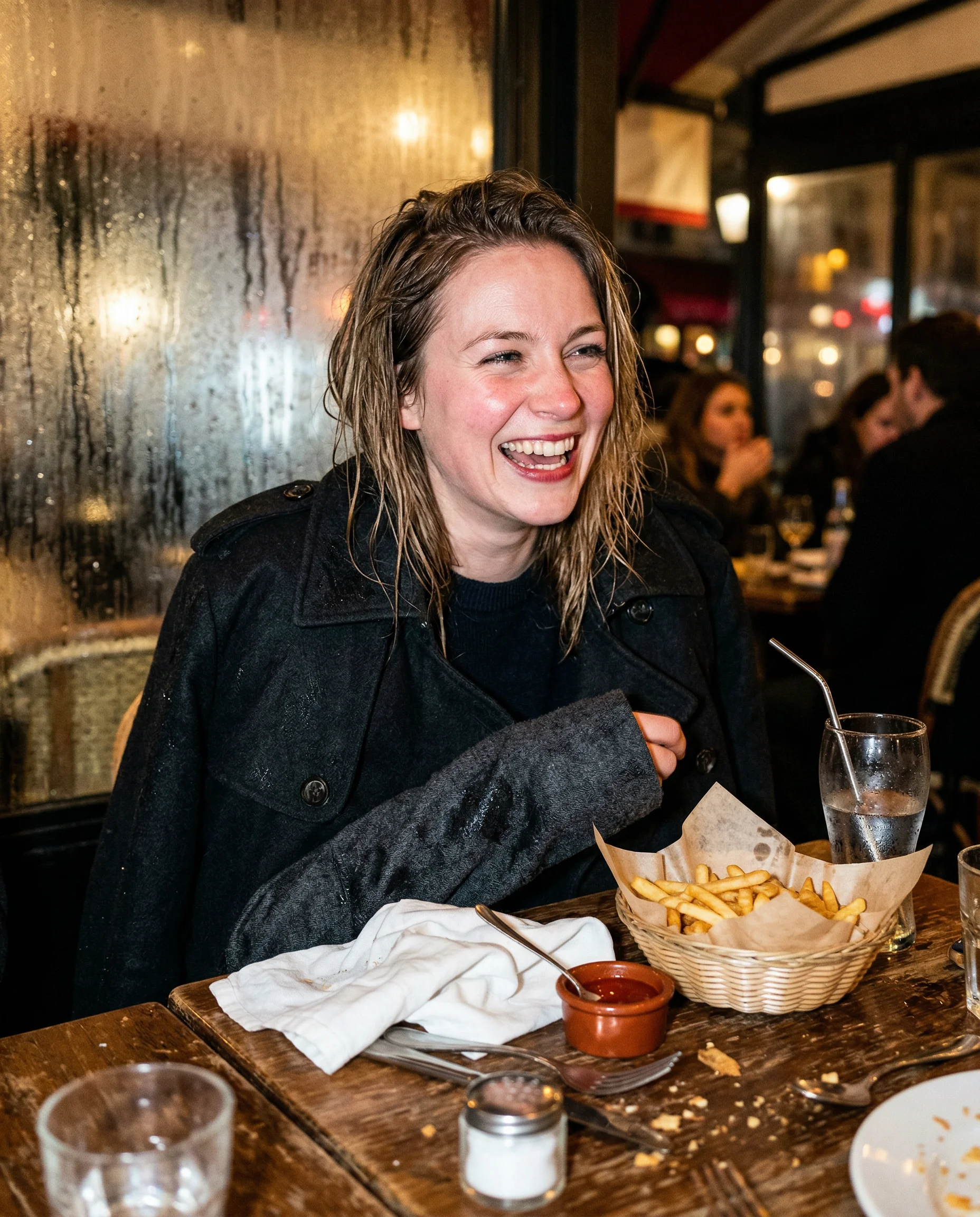
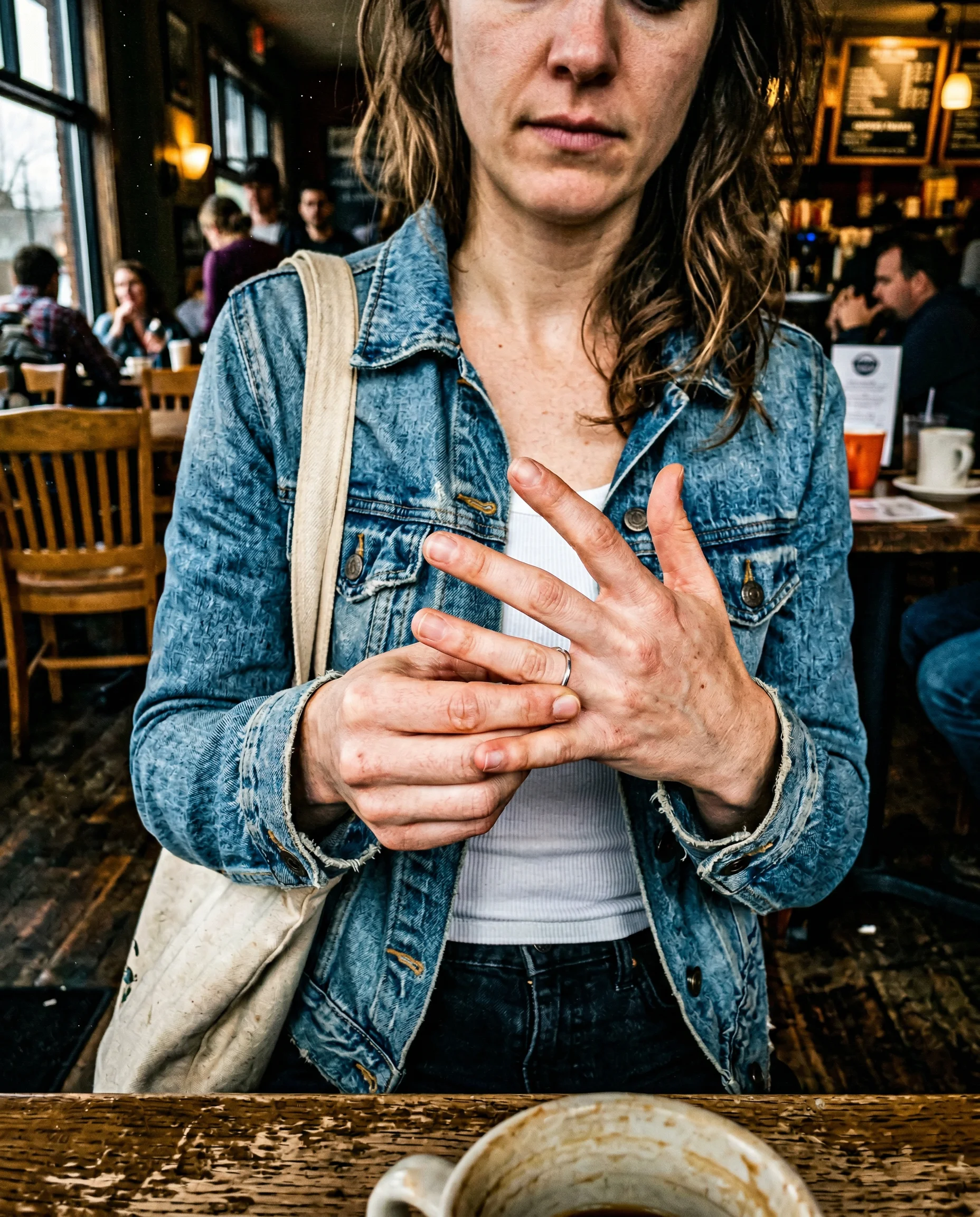
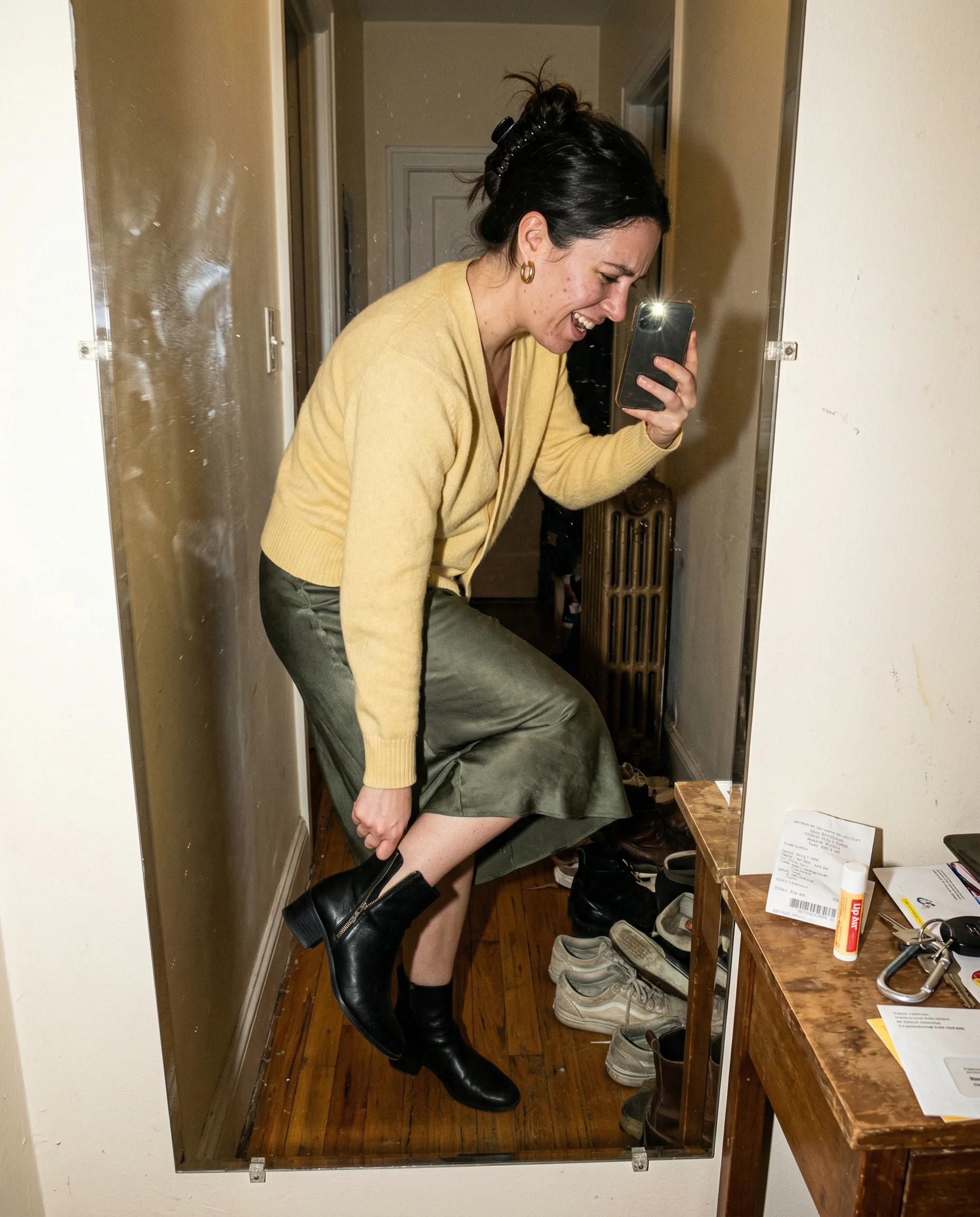
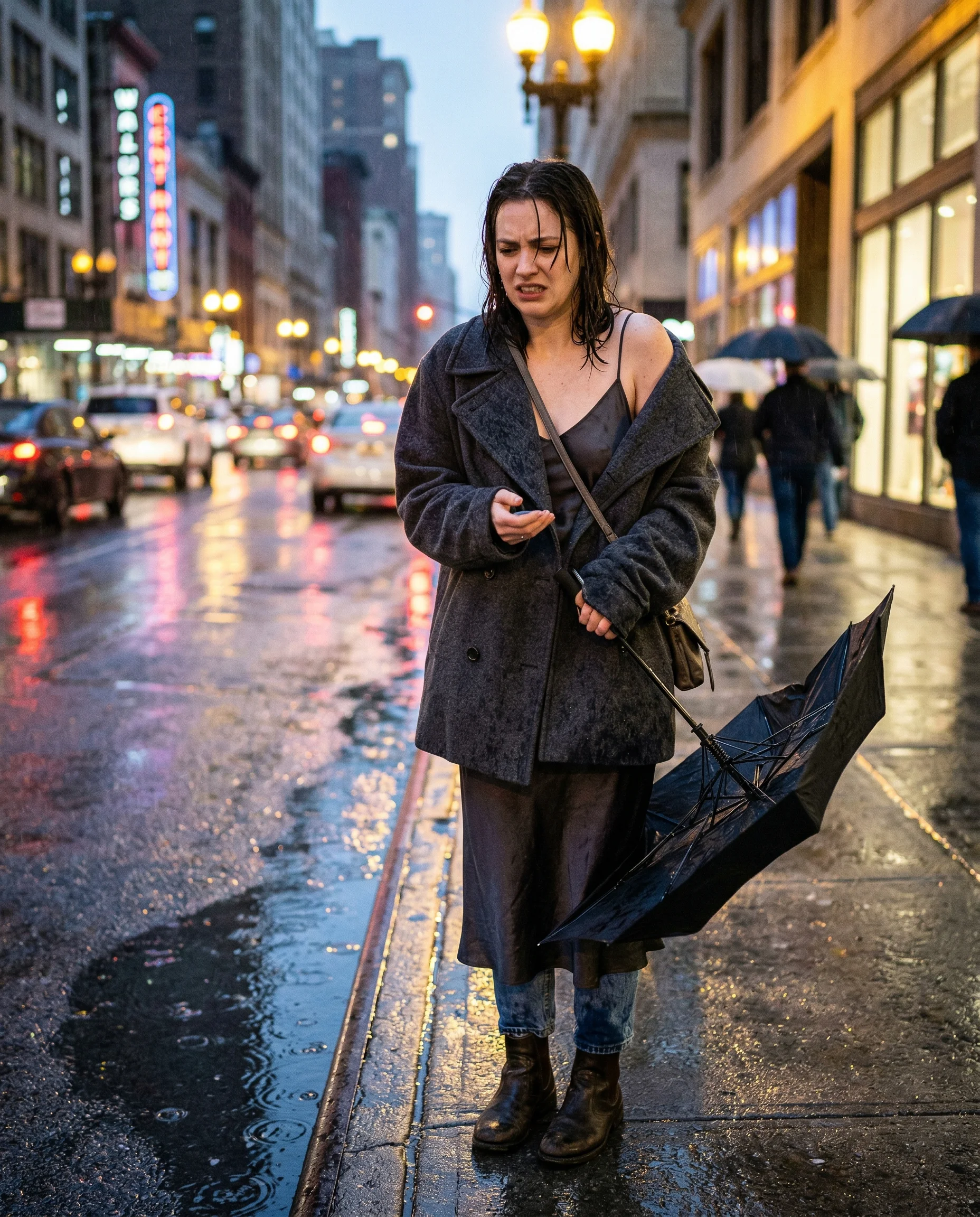
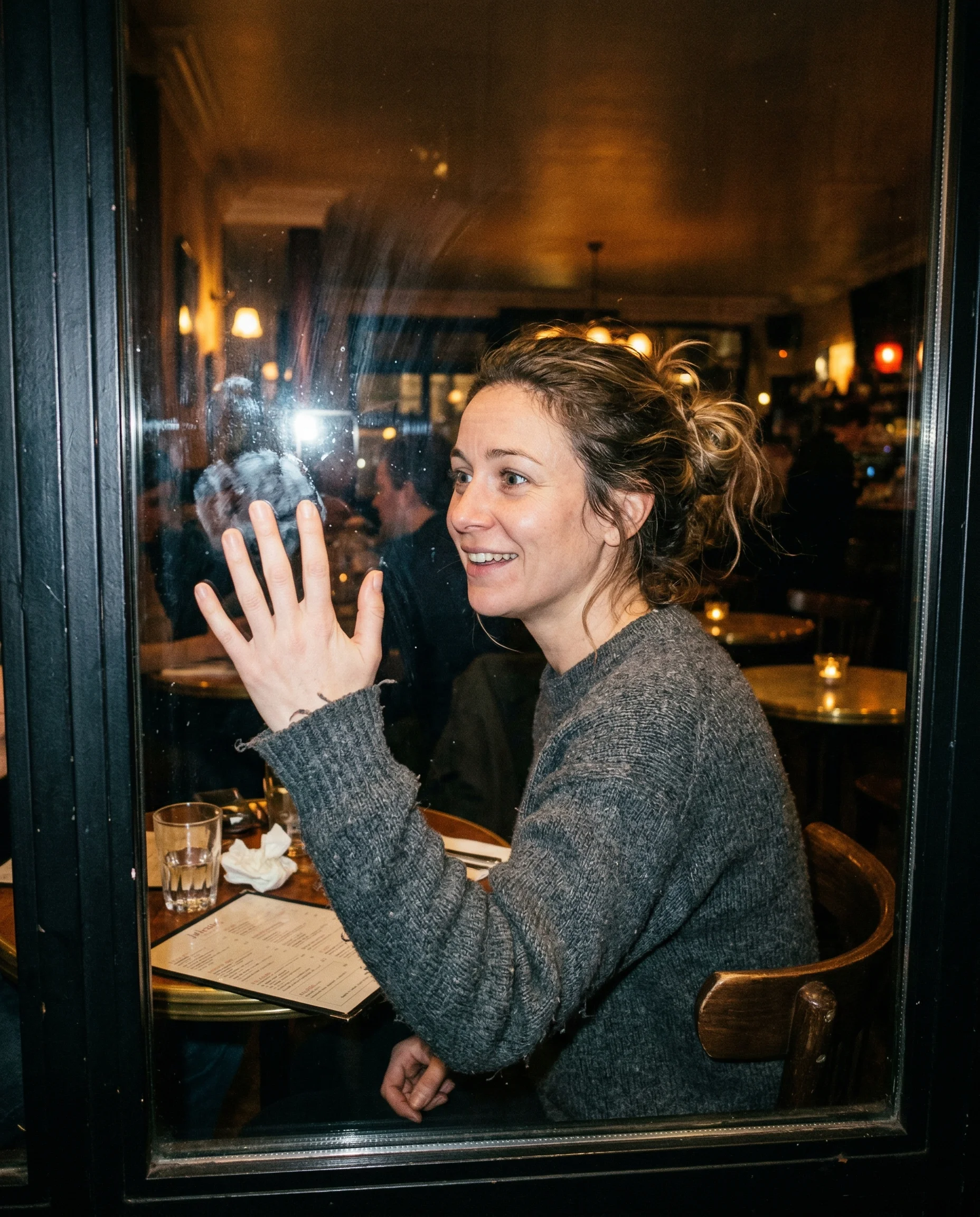
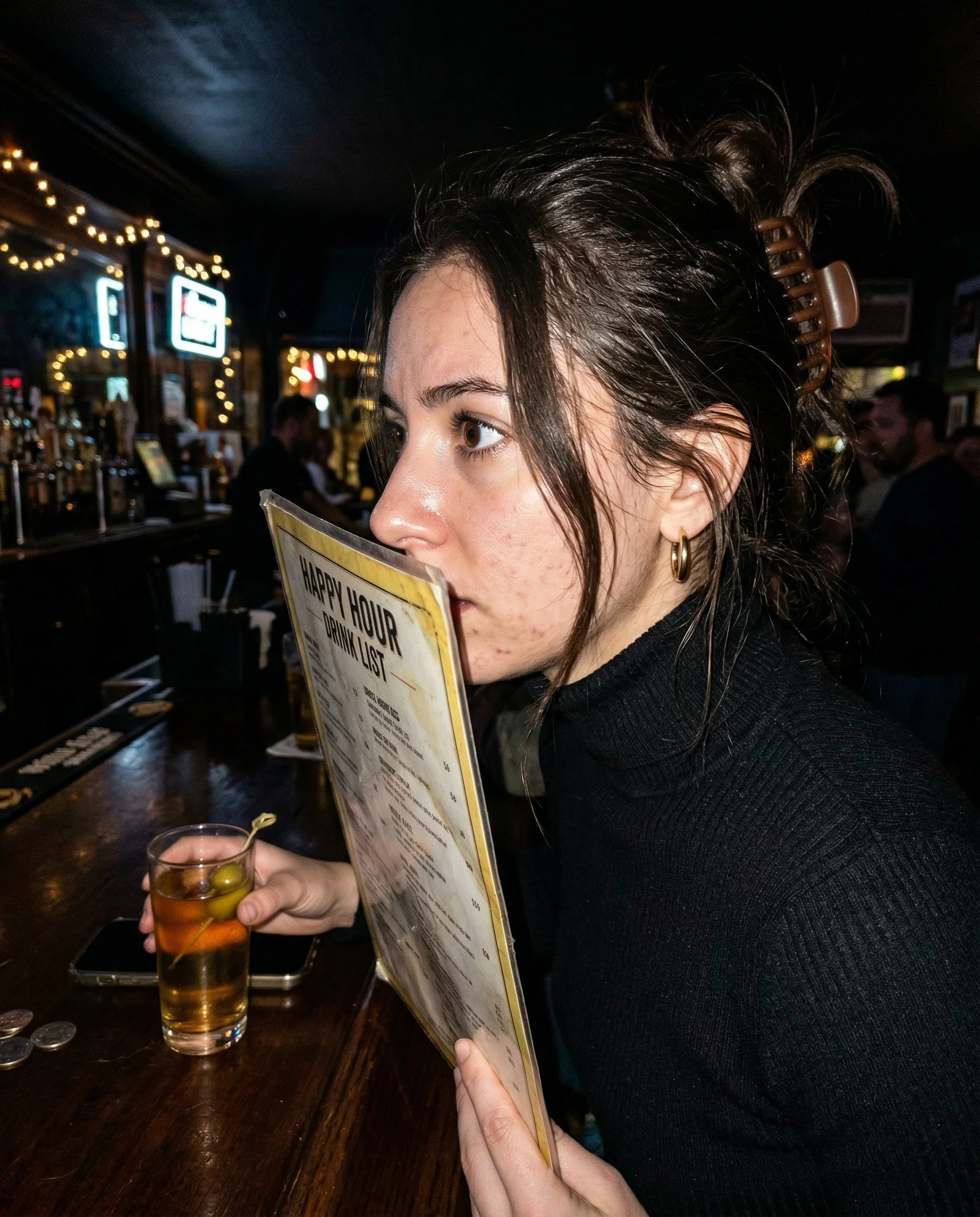
the friction of a caught zipper
I’m obsessed with the moment a zipper decides to fight back. In this frame, the metal teeth are jammed, and her fingers are doing that frantic, half-embarrassed dance that happens when you’re trying to look composed in public. The coat isn’t a fashion statement; it’s a heavy, lint-covered charcoal wool weight that’s clearly seen too many winters. By focusing on the tension in her hands as she yanks that zipper, the image moves away from a portrait and into a documented annoyance. If the coat were cleaner, or the zipper pulled shut in one smooth motion, the whole scene would lose its teeth. I need that specific look of someone who is mentally already at the table but physically trapped in the entryway.
static hair and canvas bag drag
The knit scarf is doing heavy lifting here, especially with the way it’s pulled static-charged flyaways across her forehead. It’s not just a prop; it’s a mess that she’s too preoccupied to fix. Then there’s the canvas tote bag, which is sliding off her shoulder with that familiar, annoying gravity. The bag itself is worn, stained, and stuffed with whatever she’s carrying, providing a grounding, ugly contrast to the expectation of a first date. When I see the white lint clinging to the wool and the way her hair is tangling in the scarf, I know the scene is holding up. It’s the small, unscripted failures of fabric that stop the image from feeling like a staged ad.
harsh flash on tired textures
Direct phone flash is the only way to treat a scene like this. If I used soft, diffused lighting, the pilling on the wool would disappear and the T-zone sheen would look like intentional highlighter instead of actual skin. The flash flattens the background into a deep, muddy shadow, pushing the coat rack and the dark door frame into the periphery. The light hits the bridge of her nose and the texture of the scarf, exposing every imperfection. It’s rude, it’s high-contrast, and it makes the skin look like human skin—pores, uneven tone, and all. If the lighting starts to feel flattering, I know I’ve messed up and turned a real-time fumbling moment into a d*mn photoshoot.
Frequently asked questions
How do you keep the flash from looking like a professional studio setup?
I lean into the harshness. By using a direct, high-intensity flash, you force the light to bounce off the closest surface—in this case, her coat and face—while letting the rest of the room fall into a deep, grainy shadow. If you try to soften the light, you lose the grit that makes the shot feel like a stolen phone photo.
Why does the lint on the coat matter so much?
The lint is a reality check. It proves the coat has been worn, lived in, and likely dragged through a commute. Without those small, messy details, the image would look like a catalog shoot. The pilling and white dust on the dark wool act as a physical anchor for the viewer's eye.
How do you get the expression to look socially braced?
It’s about the squint and the half-smile. She’s caught in a moment of public frustration, but she’s trying to keep her cool for whoever is waiting for her. That mix of squinting against the flash and the forced, awkward amusement is what happens when you’re caught off-guard in a transition space.
Is there a specific camera angle that works best for these entryway shots?
A low, wide-angle perspective is key. By shooting from a slightly lower position, you make the entryway feel more cramped and imposing. It adds to the feeling that she’s trapped in a tight, awkward space, rather than posing for a portrait.