
Pilates
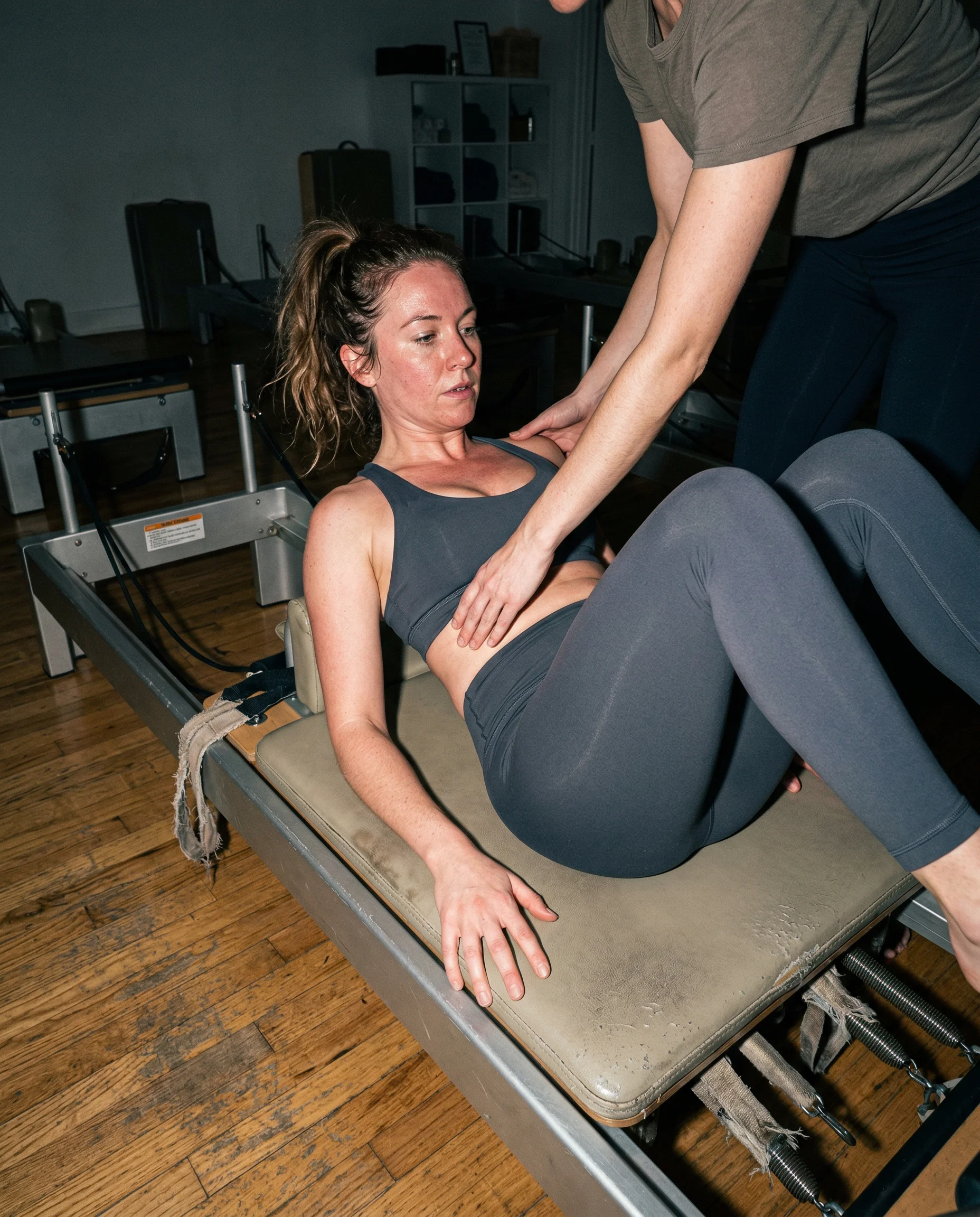
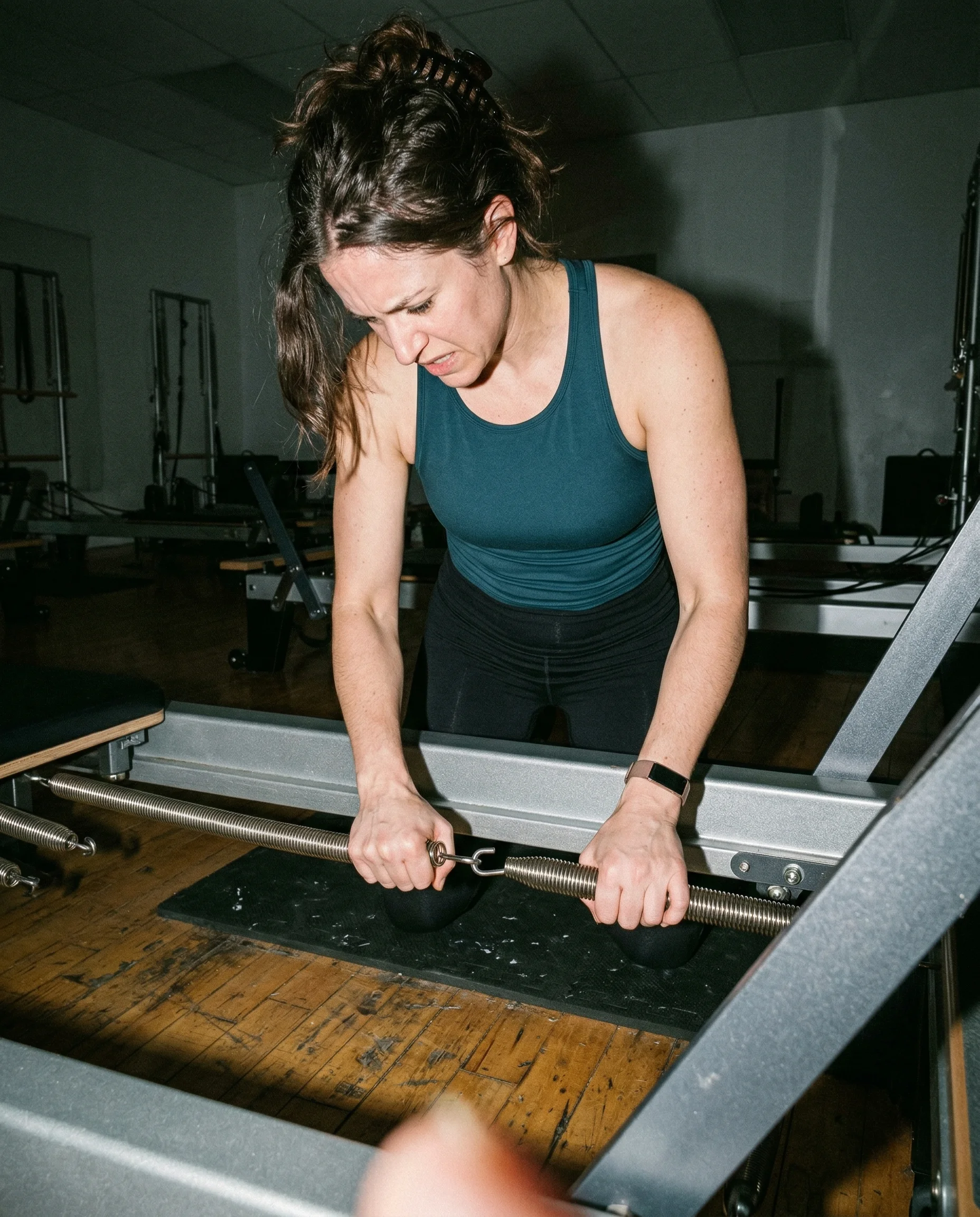
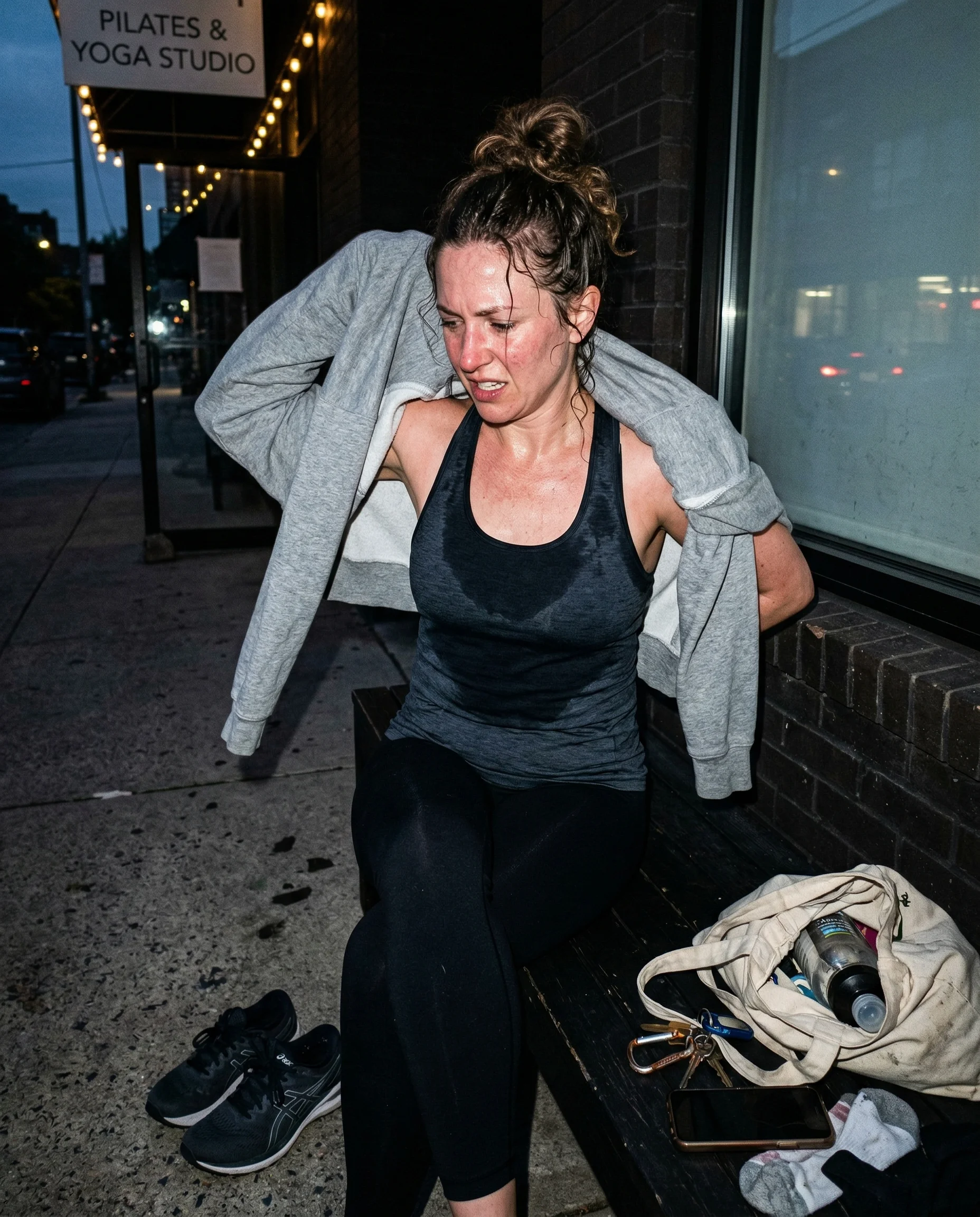
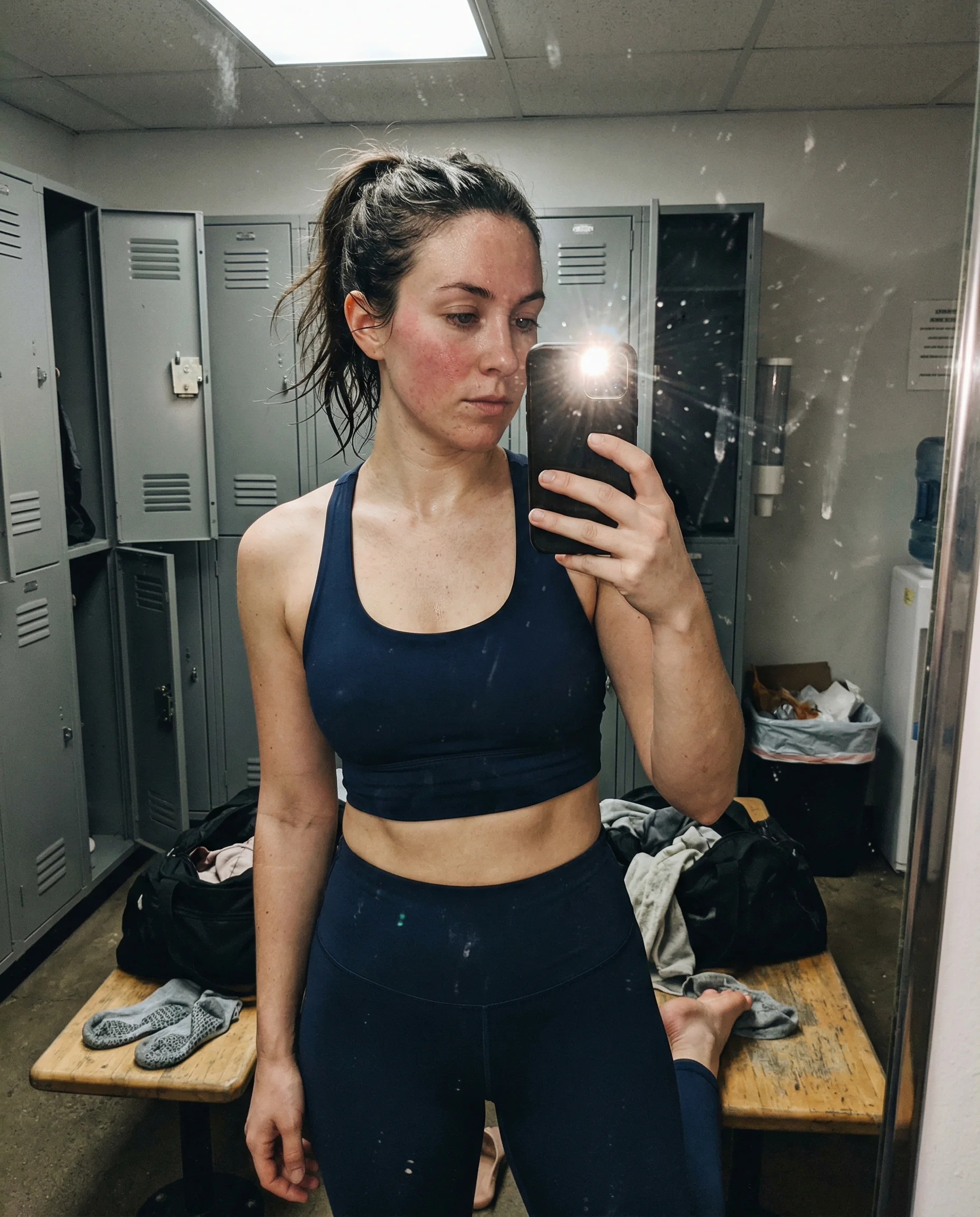
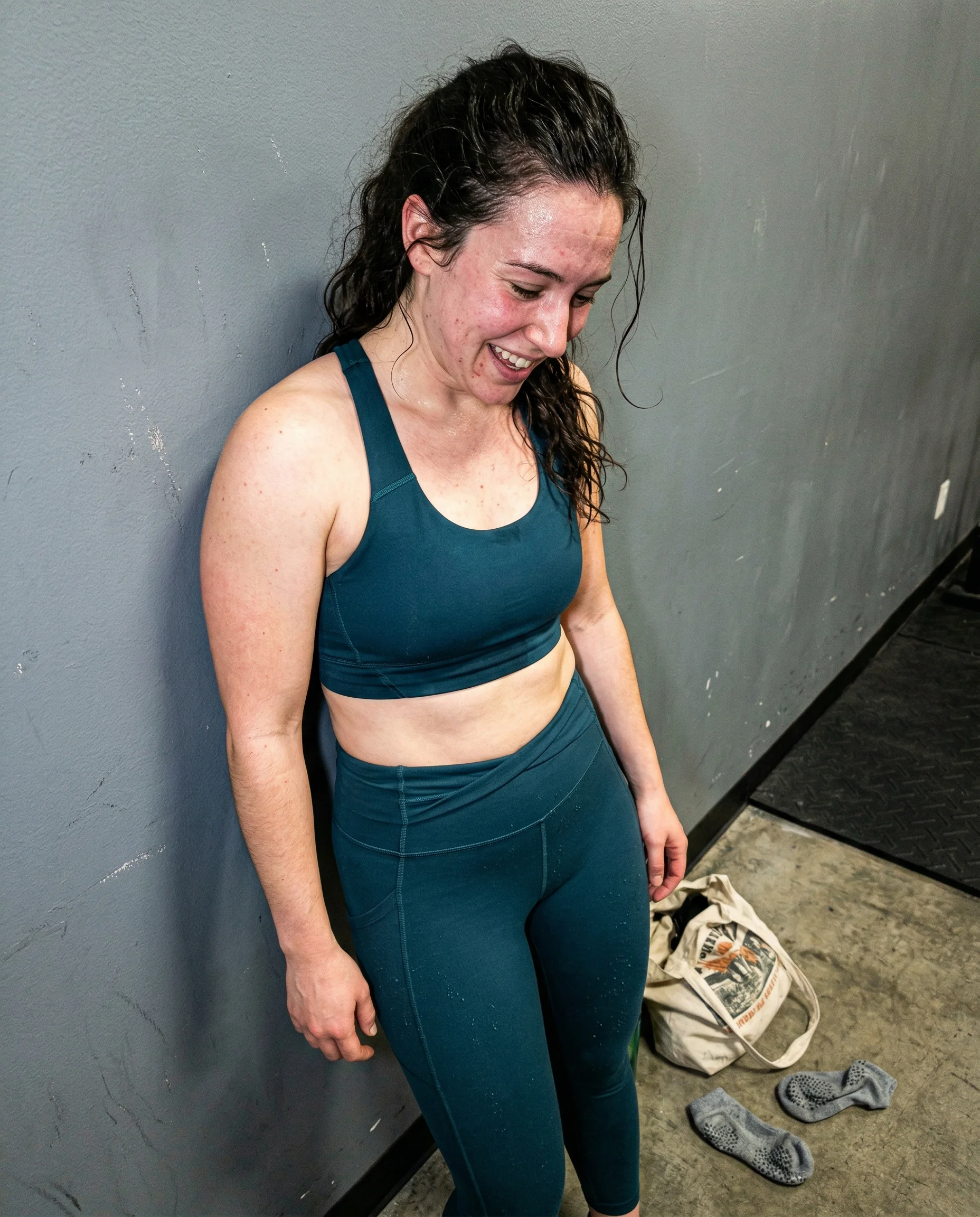
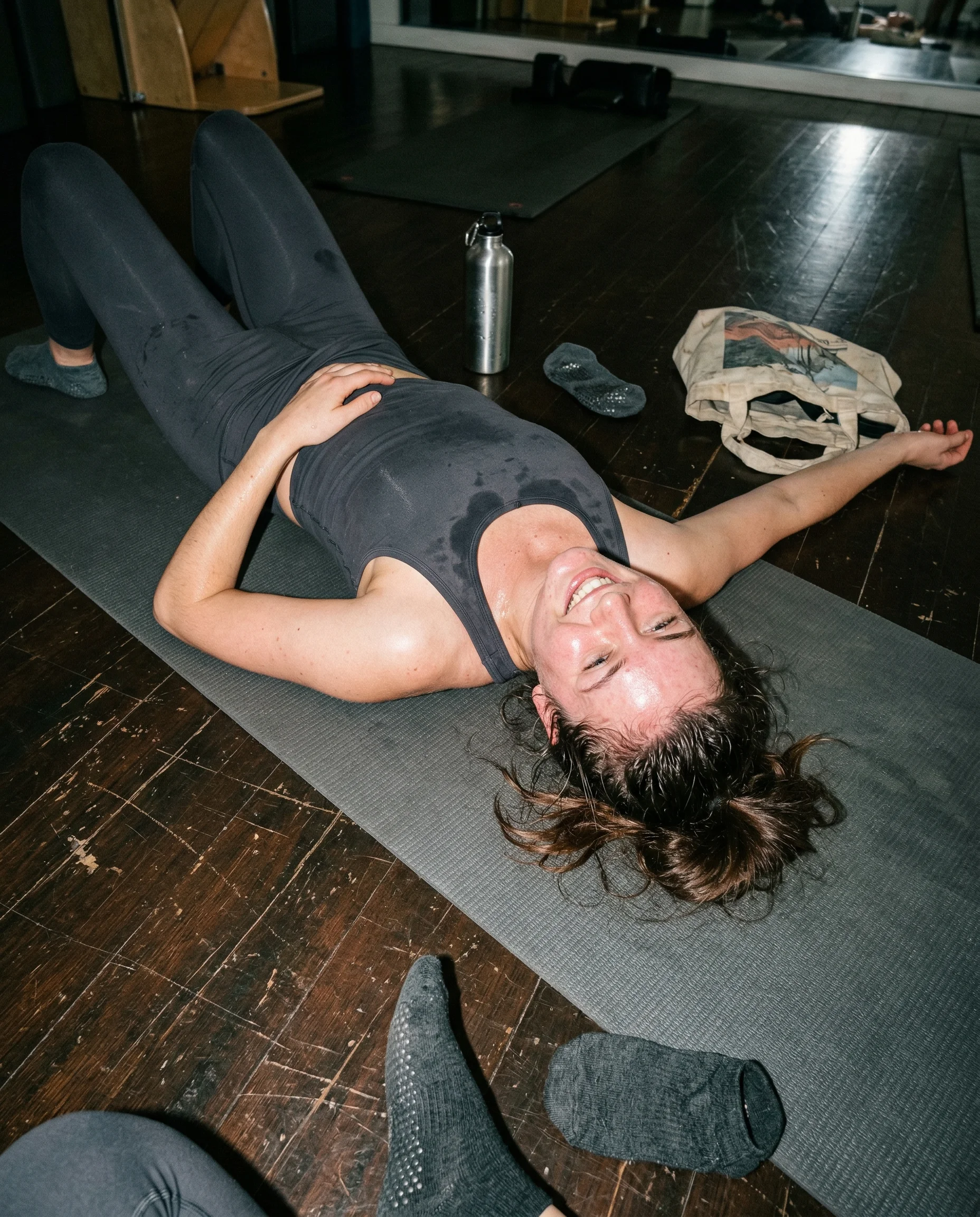
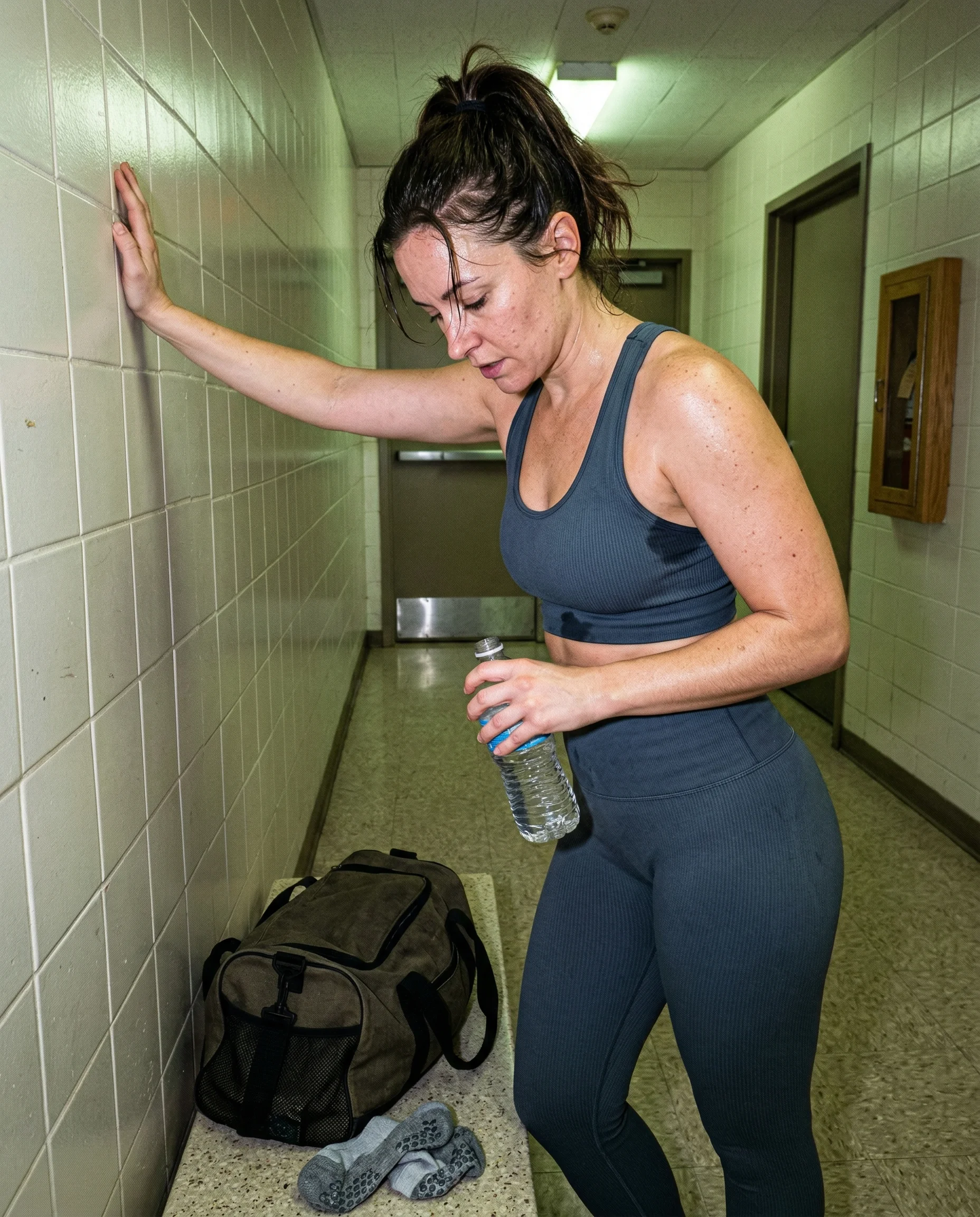
The post-class collapse where the sweat is real, the reformer springs are heavy, and the studio lighting is unforgiving.
The Reformer and the Floor
The tension in the reformer springs should match the tension in the person using it. These shots aren’t about the exercise; they are about the equipment looking heavy and the person looking like they have been fighting it for an hour. A collapse against the studio wall or a messy adjustment on the reformer works best when the camera feels dragged in from the street, not set up by a lighting tech. If the scene looks like a fitness ad, the plot is already lost.
Smudged Mirrors and Canvas Totes
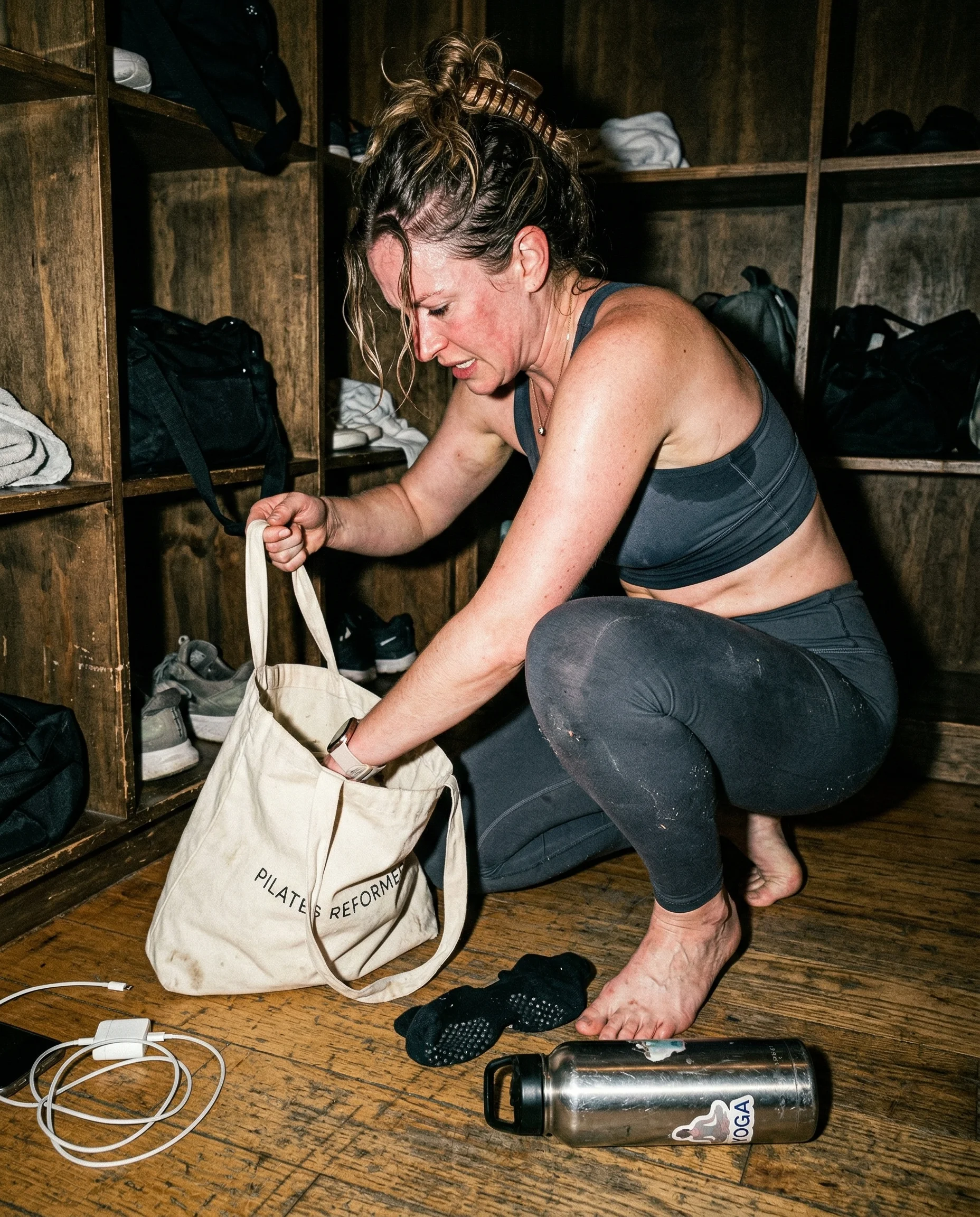
The cubby area and the locker room mirrors are the only places that matter once the class ends. I trust the pile of canvas totes, the tangled water bottles, and the way a gym bag looks when it is overflowing with damp socks. The flash needs to be rude—it should catch the smudges on the glass and the salt stains on the compression leggings before it catches anyone’s face. When the light hits the floor, I want to see the dust and the scuffs on the mat. If the mirror looks clean, the shot is a lie. I need to see the condensation, the hair ties, and the general d*mn mess of a room that has been used by twenty people in a row.
The Line Between Grit and Performance
This collection falls apart the second it starts trying to sell a lifestyle. If the compression gear looks brand new or the skin looks airbrushed, the whole thing turns into corporate sludge. I am not here for the glow; I am here for the exhaustion that makes someone lean against a wall because their legs are shaking. The moment the framing gets too symmetrical or the lighting gets too soft, the image loses its teeth. I keep the flash direct and the angles tight to ensure the focus stays on the physical reality of the post-class collapse. If it looks like a catalog, it is already dead.